Wastewater Treatment with Activated Sludge System
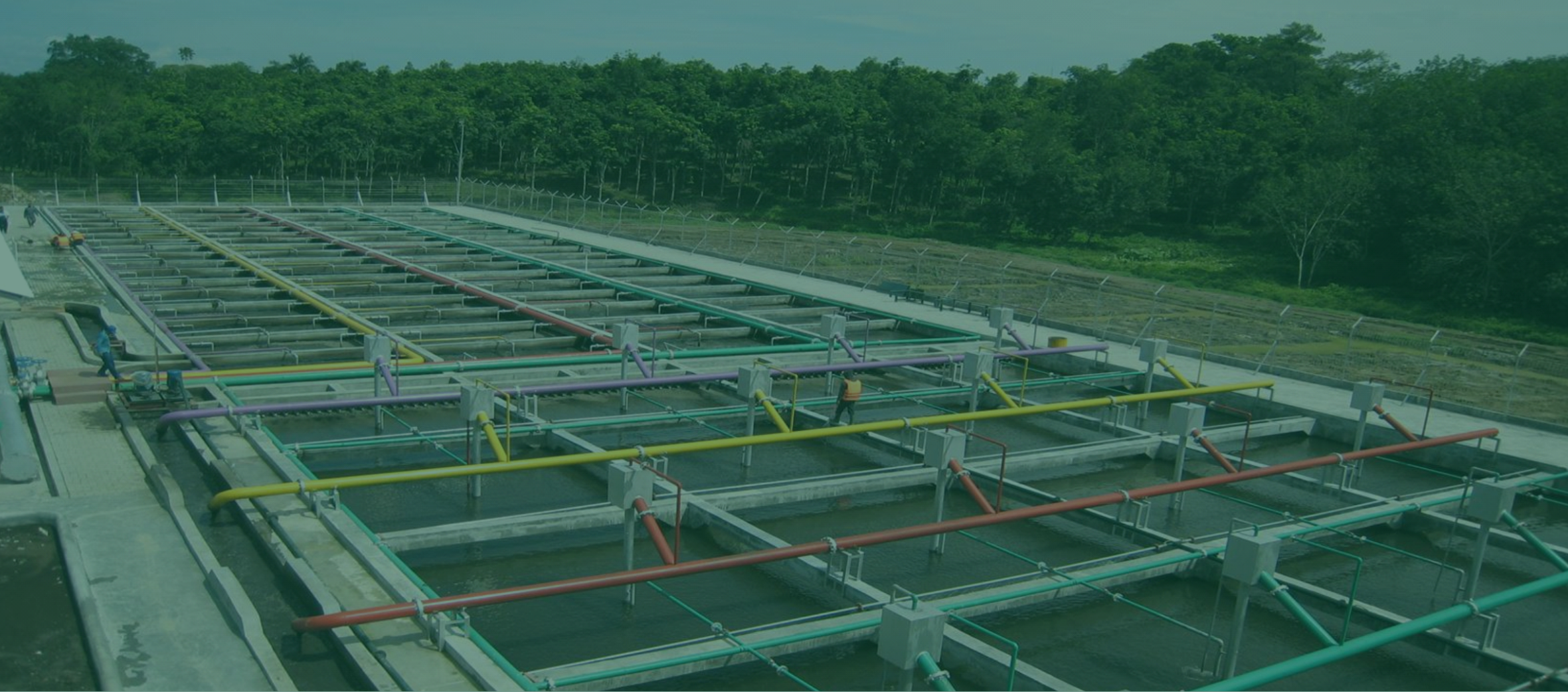
Wastewater in crumb rubber processing plants is generated from the following water-using stages:
- Cleaning of BOKAR at the breaker/slab cutter machine
- Rubber milling and granulation
In general, the wastewater produced does not contain B3 (hazardous and toxic) pollutants, because neither the raw materials nor the process methods introduce substances that generate B3 elements. In crumb rubber processing, water is one of the key inputs supporting production: rubber raw materials previously contaminated with foreign matter and soil during distribution require intensive cleaning until they are formed into sheets (blankets).
Several methods exist for treating wastewater in the crumb rubber industry; today, the most widely adopted is the activated sludge system. Activated sludge treatment relies on aerobic microbes at high concentration. Aeration ponds are typically built 3–5 m deep. For a BOD of 400 ppm, a retention time of 8–9 hours is required.
Compared with the anaerobic-facultative system and the aerated lagoon, the activated sludge system requires only about 5% of the land area used by the plantation ponding system and 10% of the area used by the aerated lagoon. However, the investment is relatively high, mainly for concrete pond construction and the aerators that supply oxygen to the wastewater treatment plant (WWTP).